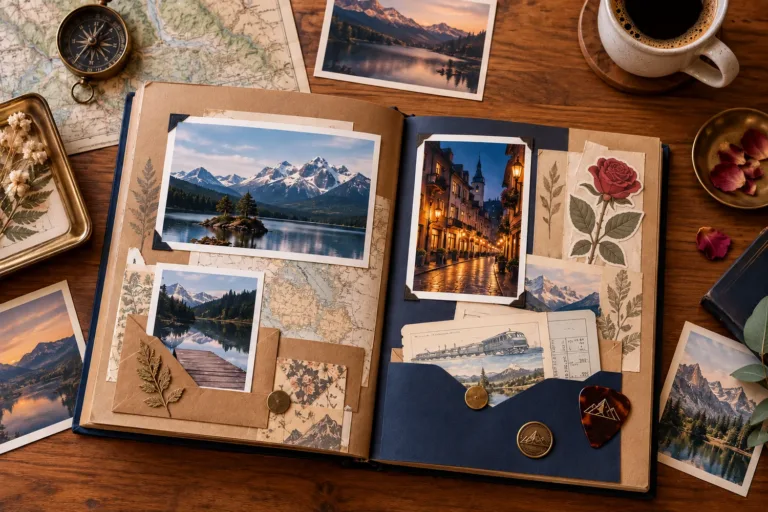
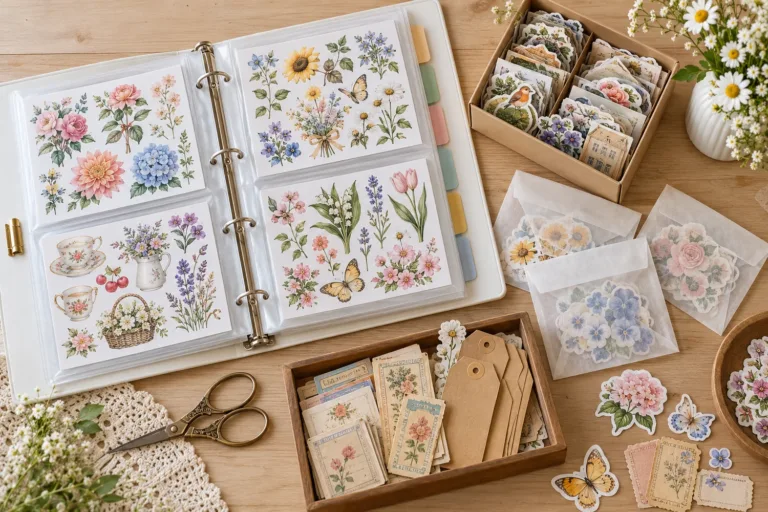
Ephemera Ideas: What It Is and 30 Ways to Use It
If you’ve spent any time around junk journals, you’ve heard the word “ephemera” and maybe nodded along without being quite sure what it covers. It sounds fancy, but it means something very ordinary: the little paper things that were never meant to last. The bus ticket, the tea tag, the label from a jar of jam, the postcard from an aunt who signs everything “love, M.”
This guide explains what counts as ephemera, where to find it (much of it is already in your kitchen drawer), how to make your own when your stash runs low, and a long list of ways to use it on journal and scrapbook pages.
Quick answer: ephemera is small, everyday printed paper that wasn’t made to be kept, such as tickets, labels, stamps, receipts, postcards, old letters and packaging. In junk journals and scrapbooks it’s layered onto pages, tucked into pockets or used as tags. You can collect it, buy vintage pieces, or print your own from ephemera printables.
What counts as ephemera
The word comes from the Greek for “lasting only a day.” Collectors use it for old printed paper: trade cards, theatre programmes, seed packets, valentines. Journalers use it more loosely for any small paper piece that adds a story or a texture to a page.
| Type | Examples | Good for |
|---|---|---|
| Travel | tickets, boarding passes, maps, luggage tags, hotel stationery | travel journals, memory pages |
| Kitchen | tea tags, jam and chocolate labels, recipe cards, sugar packets | cosy pages, recipe journals |
| Post | stamps, postmarked envelopes, postcards, letters | vintage spreads, backgrounds |
| Garden | seed packets, plant labels, pressed flowers | garden and botanical journals |
| Paperwork | receipts, library cards, ledger pages, old bills | texture and layering |
| Printed pictures | book illustrations, botanical prints, vintage ads | focal pieces and fussy cuts |
Fussy cuts (pictures cut out along their outline) and tags sit right next to ephemera and mix with it on the page. Nobody will check your definitions.

Where to find it
Start at home. Keep an envelope in a drawer for a month and drop in anything pretty that passes through your hands. You’ll be surprised how full it gets.
- Your kitchen: tea wrappers, coffee bags, bakery bags, labels you can soak off jars.
- Your post: envelopes with stamps, catalogues, postcards, greeting cards.
- Days out: museum tickets, maps, café receipts, brochures, paper bags from small shops.
- Old books and magazines that are falling apart anyway. (Please leave good books alone.)
- Charity shops and flea markets: postcards, sheet music, old photos and letters, often sold by the bag.
- Family drawers: ask before you cut anything, but older relatives sometimes have boxes of cards and tickets they’re happy to share.


Give saved paper a place on the page
Start with a ticket, postcard or label you already kept. Add one background and a small printed detail, then write why that ordinary piece of paper matters.
Build a small cluster from a saved ticket, a printed label and one botanical detail. Our vintage sticker collection offers previews and links to sets to mix with the ephemera you already own.
Printable ephemera
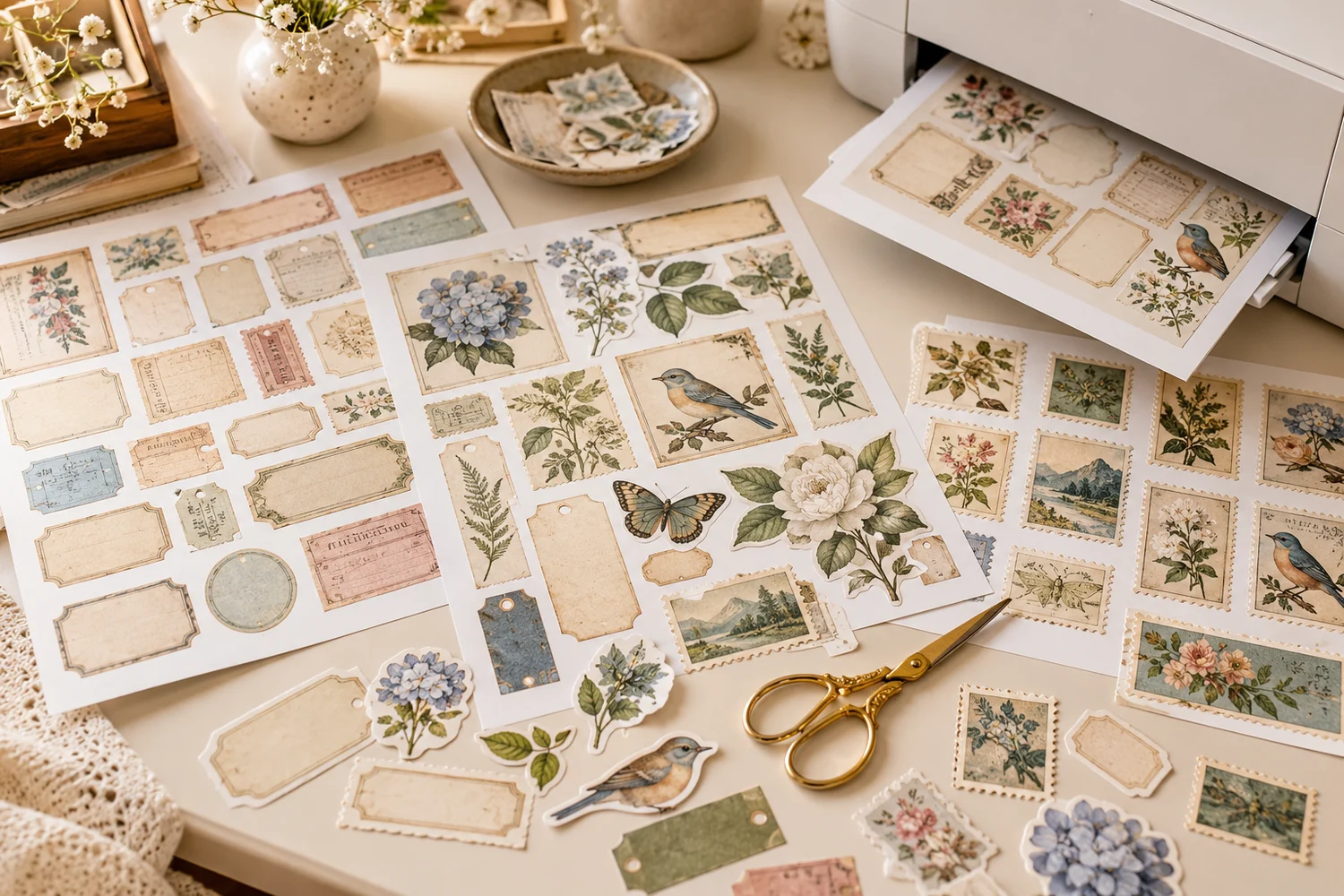
Printables solve the two problems with collected ephemera: you only have one of each piece, and the pieces never quite match. With a printable set you can print the same label five times, resize a ticket to fit a small corner, and keep a whole journal in one colour palette.
A good ephemera kit usually has labels and tags, tickets, stamps, botanical and bird illustrations, old-style receipts and letters, and a few full background papers. Our vintage sticker and ephemera printables are full of these, and seasonal sets like the Christmas junk journal printables carry the same look into December.
Printing tips:
- Print small pieces on ordinary 80-100 gsm paper. Thin paper looks more like the real thing and layers flat.
- Choose “matte photo paper” in the print settings for richer colour, even on plain paper.
- Print a whole page of pieces at once and cut them on a quiet evening, so you have a ready pile when you sit down to journal.
- Print stickers on sticker paper (here’s how to make stickers at home) and everything else on paper, then mix the two.
Make your own ephemera
Some of the nicest pieces are ones you make in an afternoon:
- Tea-dye a few tags and envelopes. A strong cup of black tea and a sponge is enough (see our guide to tea stained paper).
- Stamp a date or a postmark on plain labels with a brown ink pad.
- Cut library-style pockets from cereal boxes and cover them with patterned paper. The Template Maker prints the shape for you.
- Write a “receipt” for a good day: coffee with Anna, one walk in the rain, total: perfect.
- Paint small watercolour swatches and cut them into tags.
- Press flowers and leaves in a heavy book for two weeks.
Ways to use ephemera
Here are thirty ideas, roughly from simplest to most fiddly.
On the page
- Glue a ticket under the corner of a photo so it peeks out.
- Use a large label as a title plate for the page.
- Line up three stamps along the bottom edge as a border.
- Tuck a tag behind a photo with just the string hole showing.
- Cover a whole page with overlapping receipts, then glue a picture on top.
- Use a postcard as the main image of a spread.
- Run a strip of ledger paper down the side of a page.
- Glue a seed packet open on a garden page and fill it with tags.
- Layer three sizes of the same label for depth.
- Make a corner cluster of a stamp, a small flower and a ticket.
In pockets and folds
- Turn an old envelope into a pocket and fill it with journaling cards.
- Use a paper bag as a page, open at the top.
- Glue a map so it folds out past the page edge.
- Make a flip-up flap from a postcard with a note underneath.
- Keep a “tuck spot” made from a strip of ticket paper across a corner.
- Store small pieces in a glassine envelope glued to the page.
- Fold a letter into thirds and glue only the back panel.
- Make a mini booklet from receipts stapled at the top.
As tags and inserts
- Glue ephemera on both sides of a manila tag.
- Make journaling cards from the backs of old cards.
- Laminate a favourite ticket with packing tape to make a bookmark.
- Turn a recipe card into an insert with a recipe someone gave you.
- Back a pressed flower with a label and slip it into a pocket.
Bigger projects
- Cover a journal with a collage of postcards and maps.
- Make a whole signature from envelopes (an envelope journal).
- Build a “year in tickets” spread with one ticket per month.
- Decorate a gift box with a cluster of tags and stamps.
- Frame a small ephemera collage for a shelf.
- Make a travel journal where every page has one piece from that day.
- Start a swap with a friend: you each fill an envelope and post it.


Thirty ways to use the scraps you saved
Tickets, stamps, postcards and seed packets all have a place in a journal.
- Tuck them into pockets and envelopes.
- Layer three or four into a cluster on a page.
- Use a postcard as a photo mat or a cover.
- Keep the rest flat in a folio.
Give tickets and postcards a calm background, then leave room for the date and a short memory. Browse journal background pages and kits to find printable layers, with links to the original sets.
How to build an ephemera cluster
A cluster is a small, layered group of pieces that sits on a page like a little bouquet. It’s the easiest way to make a plain page look finished.
- Start with the biggest flat piece, like a label, a postcard or a ticket.
- Add a second piece under it at a slight angle, sticking out on one side.
- Put something with texture on top: a pressed leaf, a bit of lace, a paper clip.
- Add one small focal piece, like a bird fussy cut, a stamp or a flower sticker.
- Check the colours. Two or three that repeat in the cluster look calmer than six different ones.
- Glue from the bottom up, and leave one or two edges loose for a little lift.
Odd numbers (three or five pieces) usually look more natural than even ones. If a cluster feels too busy, take one piece away rather than adding another.

Ephemera by theme
Vintage journals lean on old script, stamps, ledger paper, sepia photos and botanical prints. Cottage and garden pages love seed packets, plant labels, gingham and bees (see our garden page ideas). Travel pages are all tickets, luggage tags and maps, and our travel scrapbook pages show how to layer them. Christmas pages use old cards, wrapping paper, tags and gift labels, and the Christmas scrapbook ideas have nine pages to copy.

Storing your stash
Ephemera piles up quickly and gets crumpled if it lives loose in a box. A few habits help:
- Sort it by type (tickets, labels, stamps, pictures) in small envelopes or zip bags.
- Keep flat pieces flat. An accordion folder or a photo box with dividers works well.
- Store printables digitally in folders by theme and print as you go, so you don’t keep stacks of prints you never use.
- Keep a small “working pile” on your desk for the current journal and put the rest away.
- Keep anything precious (old letters, family photos) as copies and glue the copy. The original stays safe in a box.
For more on organising papers and tools, see junk journal supplies.

Common questions
What is ephemera in junk journaling?
Small printed paper items like tickets, labels, stamps, postcards, receipts and old letters, used to decorate and layer journal pages.
What’s the difference between ephemera and embellishments?
Ephemera is flat paper with a printed story. Embellishments add texture or dimension: lace, buttons, charms, clips and ribbons.
Is printable ephemera “real” ephemera?
For a journal it works the same way, and many journalers mix printed and found pieces on every page. Printables are also the safe choice when you’d rather not cut up something old.
What paper should I print ephemera on?
Ordinary 80-100 gsm printer paper for small pieces, and 120-160 gsm matte paper for larger ones you’ll write on or use as tags.
How do I make new paper look old?
Tea or coffee staining, ink rubbed along the edges, and a little crumpling all work. Our tea stained paper guide walks through it.
Where can I get vintage ephemera?
Flea markets, charity shops, online marketplaces and family drawers. For pieces you can reuse many times, use printable ephemera kits.
Open your kitchen drawer, find three bits of paper you’d normally throw away, and make one small cluster on a blank page tonight. If you want a ready set to start with, browse our clipart and stickers and background pages.