Junk Journal Supplies: What You Really Need to Start
Walk into any craft shop and the junk journal aisle will try very hard to convince you that you need everything: forty kinds of glue, a die-cutting machine, three hundred stamps. You don’t. Some of the most beautiful journals we’ve seen were made with a glue stick, a pair of scissors and a shoebox of saved paper.
This guide sorts junk journal supplies into what you really need, what is genuinely worth adding later, and what you can happily skip. You’ll also find what each tool is for, a starter list for a small budget, the free things hiding in your home, and how to keep it all organised without taking over the house.
Quick answer: the essential junk journal supplies are a journal or folded paper booklet, a glue stick, double-sided tape, small scissors, a pen and a pile of papers and ephemera (your own scraps plus printable backgrounds and stickers). Washi tape, paper clips, a stamp and ink pad and a corner rounder are the best next additions; everything else can wait.
The essentials: start here
If you buy nothing else, these six things will carry you through your first journal and probably your second.

- A journal base. Any notebook with thick pages, an old hardback book, or a booklet you fold and stitch yourself from printed paper. We show four easy options in how to start a junk journal.
- A glue stick. The workhorse. Clean, quick, and it doesn’t wrinkle thin paper.
- Double-sided tape. For photos, cardstock and anything a glue stick can’t hold.
- Small sharp scissors. Detail scissors for fussy cutting, plus any bigger pair for trimming papers.
- A pen you love writing with. A fine black pigment pen works on almost every paper and doesn’t smudge.
- Papers and pictures. A mix of your own saved scraps and a few printable sets: background papers, ephemera and stickers.
Glue and adhesives: which one for what
Adhesive is where beginners waste the most money, because every glue promises to do everything. Here’s what each one is actually good for.
| Adhesive | Best for | Watch out for |
|---|---|---|
| Glue stick | paper on paper, backgrounds, ephemera, fussy cuts | weak on photos and heavy card; edges can lift, press well |
| Double-sided tape | photos, cardstock, tags, pockets | hard to reposition once pressed |
| Tape runner | fast, even lines of adhesive on big pieces | refills cost more than plain tape |
| Foam tape / foam dots | lifting a picture off the page for a 3D look | makes the journal bulky, use sparingly |
| Liquid craft glue (PVA) | fabric, lace, buttons, pressed flowers | wrinkles thin paper; use a thin layer and press under a book |
| Matte gel medium | collage, sealing layers, gluing book pages | takes time to dry; more of an extra than an essential |
Our everyday combination: a glue stick for 80% of the page, double-sided tape for photos and pockets, and a small bottle of craft glue for lace and buttons.

Cutting tools
- Detail scissors. Short, pointed blades for curves and fussy cuts. Keep them just for paper so they stay sharp.
- A paper trimmer. Not essential, but it makes straight edges, mats and tags quick and neat. A small one is enough.
- Craft knife and cutting mat. For slits, windows and tuck spots, and for cutting inside shapes.
- Corner rounder. A tiny punch that softens corners of photos, tags and cards. Small tool, huge difference.
- Deckle-edge scissors. Cut a soft, torn-paper edge. Or simply tear against a ruler.
- A cutting machine (Cricut, Silhouette). Lovely for print-then-cut stickers and tags, but only worth it once you know you’ll use it a lot.


Build a useful kit before adding extras
Set out scissors, a glue stick, a pen and a few papers before adding specialist tools. One coordinated paper set can work alongside envelopes, tickets and scraps you already have.
If you want coordinated papers in your starter kit, begin with one background set and use saved scraps for the rest. Our journal paper collection shows previews and links to sets for simple first pages.
Paper and printables
Paper is the bulk of a junk journal, and you’ll use more than you think. A good mix:
- Background papers to cover whole pages: florals, gingham, damask, kraft, old script. Our junk journal background pages and the whole paper and backgrounds collection are ready to print.
- Plain “quiet” papers in cream, kraft and soft colours. Every busy page needs somewhere for the eye to rest.
- Cardstock for covers, pockets, mats and tags.
- Textured papers: tissue, vellum, baking paper, coffee filters. Layered over prints they add softness.
- Book pages, maps and sheet music for that classic vintage feel.
| What you print | Paper | Weight |
|---|---|---|
| Background pages | matte presentation paper | 120-160 gsm (32-43 lb) |
| Ephemera and fussy cuts | ordinary printer paper | 80-100 gsm (20-27 lb) |
| Tags, pockets, covers | matte cardstock | 200-250 gsm (70-90 lb) |
| Stickers | matte sticker paper | , |
Printing tip: choose “matte photo paper” in the print settings when printing on heavier matte paper. The colours come out deeper, and vintage prints look properly old instead of flat.

Ephemera: the heart of it
Ephemera is the word journalers use for small paper things that were never meant to last: tickets, labels, stamps, old receipts, postcards, pictures cut from magazines. It’s what makes a junk journal look like a treasure box rather than a notebook.
- Saved ephemera: keep a box for anything pretty that comes through your door.
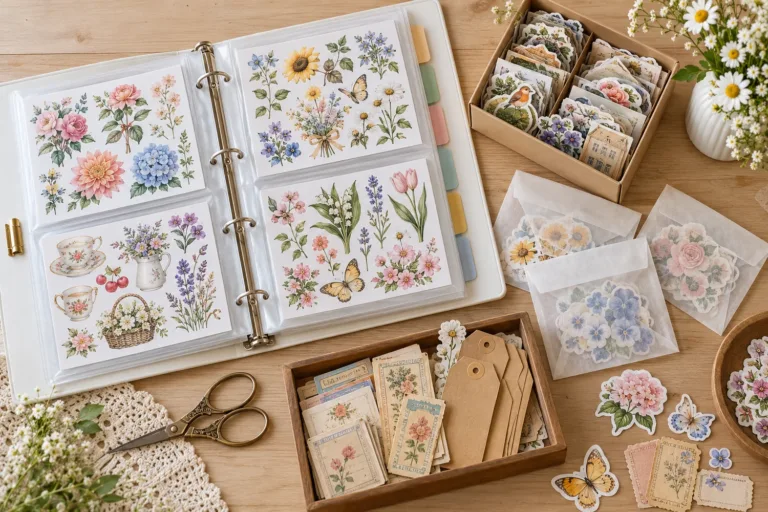
- Printable ephemera: vintage labels, botanical prints, tickets, stamps and fussy cuts you can print as many times as you like. See our vintage printables and fussy cuts, flower stickers and seasonal sets like Christmas junk journal printables.
- Tags and journaling cards: small cards to write on and tuck into pockets.
- Stickers: printable sticker sheets in your theme. Here’s how to make stickers at home.

Embellishments worth having
These are the “next” supplies: buy them one at a time, when you find yourself wishing for them.
- Washi tape. Low-tack paper tape for hiding edges, holding photos and adding a stripe of pattern. Three rolls in your colours are enough.
- Paper clips and binder clips. Vintage-looking clips hold tags on the edge of a page and add texture.
- A stamp and an ink pad. One script or postmark stamp and a brown ink pad. Rub the ink pad lightly along paper edges to “age” them.
- Lace, ribbon and fabric scraps. A strip of lace under a photo instantly looks cosy.
- Buttons and charms. Lovely, but bulky. One per spread is plenty.
- Pressed flowers and leaves. Free from the garden; dry them in a heavy book for two weeks.
- Coloured pencils or watercolours to add a wash of colour behind a picture.

Binding supplies (only if you make your own book)
- Bone folder (or the back of a spoon) for crisp folds.
- Awl or a thick needle for piercing holes.
- Waxed thread or embroidery thread for stitching signatures.
- A long-reach stapler as a no-sew alternative.
- Binder rings or ribbon for envelope and loose-page journals.
- Cardstock or a cereal box covered with printed paper for the cover.

Match the supply list to the style you love
The pin shows the cottage look at its calmest: a floral cover, a few tape rolls, a mug, and no more on the desk than the page needs. That is the idea of this section — choose the style first, and the shopping list follows.
Start from the look you love and the must-buy list shrinks to a handful of things you will genuinely use.
Supplies by journal style
Once you know which look you love, your supply list almost writes itself. Here is what we’d gather for five favourite styles.

Vintage and ephemera
Old book pages, ledger and script papers, postage stamps, luggage tags, sepia photos, brown ink pad for aged edges, brass paper clips, lace, tea-stained tags. Printables: vintage labels, tickets and botanical prints from our vintage sticker printables. Colours: cream, coffee, faded rose, sage.
Cottagecore and garden
Floral and gingham papers, seed packets, pressed flowers, bee and butterfly fussy cuts, linen or cotton scraps, a green and a pink washi tape, string-free tags. See the garden page ideas and flower stickers. Colours: sage, butter yellow, blush, cream.
Botanical
Vintage-style botanical illustrations, pressed leaves, vellum for soft overlays, kraft cardstock, a leaf stamp, plain cream papers so the plants can breathe. Colours: olive, moss, kraft, ivory.
Travel
Maps, tickets, boarding passes, postcards, a passport-style stamp, small photo prints, envelopes for keeping receipts, a world-map paper for the cover. Layouts: our travel scrapbook pages. Colours: navy, terracotta, sand.
Christmas
Old Christmas cards, wrapping paper scraps, red and green gingham, tags, gold paper clips, vintage ornament and holly fussy cuts, a snowflake punch. Printables: Christmas junk journal printables and pages from Christmas scrapbook ideas. Colours: deep red, pine green, gold, cream.
Not sure which colours go together for your style? Pick one favourite picture and let our Color Planner pull a palette from it, then gather supplies only in those colours. It’s the fastest way to make a journal look “designed”.
Digital junk journal supplies
Digital junk journaling uses the same kinds of pieces (papers, ephemera, stickers, tags), but as image files you arrange on a tablet or computer. Many people do both: plan a spread digitally, then print it.
- PNG clipart and ephemera with transparent backgrounds, so pieces can overlap like real paper. Browse our clipart and stickers.
- JPG background papers at full page size.
- An app: GoodNotes or Notability on a tablet, Canva or any layered design program on a computer.
- Optional: a stylus for handwriting on the page.
The best part: one set of digital supplies never runs out. Print your favourite tag twenty times, resize a flower to fit a tiny corner, or recolour a paper to match a photo.
Free supplies already in your home
Before you spend anything, have a treasure hunt. All of these make beautiful journal pages:
- tea tags, tea bag wrappers and used tea bags (dried and emptied)
- bakery bags, paper doilies, coffee filters
- pretty labels from jam jars, chocolate and wine
- envelopes, especially with stamps and postmarks
- train, bus, museum and cinema tickets
- greeting cards and postcards
- old maps, timetables and brochures
- seed packets and plant labels
- buttons, ribbon and lace from old clothes and gift wrap
- pages from damaged books and old calendars
Keep a “junk envelope” in a kitchen drawer and drop things in as they arrive. In a month you’ll have more than enough for a whole journal.


Build the lemon-and-flower starter spread
Use the pin as a guide to a small working kit: yellow checked paper, floral scraps, a blank tag, a small envelope, a pen, scissors and adhesive. The essentials and paper sections explain what you need first and how to choose extras without buying a large collection.
To make the tag pocket, fold a rectangle of paper, then glue its bottom and two sides to the page. Leave the top open and slide in a tag with a handwritten memory. Choose lemon motifs from papers or stickers you already have, and repeat their yellow in a small border.
Starter lists for three budgets
| Almost free | Small budget | A little treat |
|---|---|---|
| notebook you have glue stick scissors pen saved paper scraps a few printed pages | everything on the left, plus: double-sided tape a pack of matte paper printable background papers and ephemera 2-3 rolls of washi tape | everything on the left, plus: detail scissors corner rounder stamp and brown ink pad matte sticker paper a small paper trimmer |
Printables stretch every budget: you buy or download a set once and print exactly what you need, again and again, instead of buying paper pads where you only like half the sheets.
What you can skip (for now)
- Big all-in-one kits. Half of the bits rarely match your style.
- Large stamp and die collections. Wait until you know what you actually reach for.
- Specialist glues. A glue stick, tape and one craft glue cover almost everything.
- A cutting machine. Wonderful, but scissors make the first journal just as lovely.
- Expensive blank journals. A handmade booklet from printed paper looks more “junk journal” anyway.
How to organise junk journal supplies
Paper multiplies. A simple system keeps it fun instead of overwhelming.

- Sort papers by colour, not by theme. When you build a page, you think “something green”, not “something from that pack”.
- Use clear zip folders or document wallets for papers, one per colour family.
- Small ephemera lives in envelopes or a photo box with dividers: tickets, labels, tags, fussy cuts.
- Keep a “working box” with only what you’re using for the current journal. Everything else stays put away.
- Tools in one jar on the table: scissors, glue stick, pen, tape.
- Store printables digitally in folders by theme on your computer and print as you go, no stacks of unused prints.
Common questions
What supplies do I need to start junk journaling?
A journal or folded booklet, a glue stick, double-sided tape, scissors, a pen and some papers and pictures. That’s genuinely enough for your first journal.
What is the best glue for junk journals?
A glue stick for paper, double-sided tape for photos and cardstock, and a little craft glue for fabric and buttons. Avoid soaking thin paper with liquid glue, it wrinkles.
Can I use regular printer paper?
Yes. It’s perfect for ephemera, fussy cuts and inserts. For full background pages choose 120-160 gsm matte paper, or glue printer paper onto a thicker page.
What’s the difference between ephemera and embellishments?
Ephemera is flat paper: tickets, labels, pictures, tags. Embellishments add texture or dimension: lace, buttons, clips, charms, flowers.
Are printable junk journal supplies worth it?
For most people, yes: you can print any amount, choose your own size, and keep everything in one colour palette. Mix them with real found papers for the most “lived-in” look.
Where do I keep my supplies if I don’t have a craft room?
One photo box or a shallow drawer is enough: papers in clear folders sorted by colour, ephemera in envelopes, tools in a jar.
Do I need a cutting machine for junk journaling?
No. Scissors and a craft knife do everything you need. A machine saves time if you make a lot of stickers or tags.
Start with what’s on your table today: a glue stick, scissors and a few papers you love. Print a background and a sheet of ephemera, make one spread, and let your supply list grow from what you actually reach for. For page inspiration, our junk journal page ideas are a lovely place to begin, and the Journal Ideas generator will give you a prompt when you need one.